


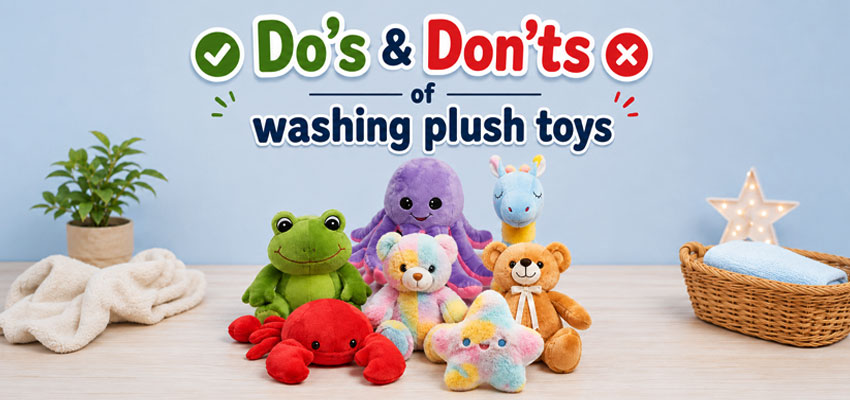
Soft toys often become a child’s favourite comfort companion. They travel everywhere, collect dust easily, and go through everyday wear without anyone noticing. That is why cleaning plush toys regularly is important for maintaining both hygiene and softness. Proper care can help plush toys stay fresh, fluffy, and safe for children who cuddle them daily. With a few simple cleaning habits, parents can also protect the fabric, stitching, and shape of these much-loved soft toys for a longer time.
Table of Contents
- Start by Checking the Care Instructions
- Use Mild Soap Instead of Strong Detergent
- Don’t Leave Plush Toys Soaking for Hours
- Drying Properly Makes a Huge Difference
- Don’t Ignore Strange Smells
- Handle Decorative Plush Items Gently
- Avoid Using High Heat While Drying
- Regular Care Helps Plush Toys Last Longer
- Conclusion
Start by Checking the Care Instructions
A lot of people skip the label and throw soft plush toys for babies directly into the washing machine. Sometimes that works, but sometimes it completely ruins the toy. Different fabrics react differently to water and heat. Some can be machine-washed like plush toys, while others need gentle hand washing.
This becomes even more important when dealing with adorable plushies with stitched details, ribbons, or decorative fabric attached. Spending two minutes checking the instructions can actually save the toy from fading, tearing, or losing its shape.
Use Mild Soap Instead of Strong Detergent
Harsh detergents may clean quickly, but they can also leave plush fabric feeling rough and dry. Mild soaps usually work much better, especially for hygienic cleaning of stuffed toys that children use every single day.
Parents often forget that soft plush toys for babies stay close to a child’s skin for hours. Using gentle cleansers helps avoid irritation while still removing dirt properly. Even frequently used baby stuffed animals stay softer for longer when cleaned with light soap and lukewarm water instead of heavy chemicals.
Don’t Leave Plush Toys Soaking for Hours
One common mistake people make is soaking plush toys for too long. It may seem harmless, but excess water can slowly weaken the stitching and damage the filling inside.
If you are trying to remove stains from plush toys, spot cleaning is usually a safer option. A damp cloth with mild soap can handle most marks without putting stress on the fabric. This works especially well for delicate plush animal toys that can lose their shape after heavy washing.
Drying Properly Makes a Huge Difference
A toy that looks clean from the outside may still hold moisture inside the stuffing. That trapped moisture is what often creates unpleasant smells later.
After washing, always dry plush toys properly by gently pressing out extra water with a towel. Avoid twisting or pulling the fabric too hard. Air drying near a window or under indirect sunlight works best for most stuffed animal toys. It also helps a favourite teddy bear for kids stay fluffy instead of becoming stiff after drying. Parents who keep washable teddy bears at home often notice that gentle air drying helps preserve their softness much better over time.
Don’t Ignore Strange Smells
Soft toys absorb more than people realise. Dust, sweat, food spills, and even room odours slowly build up over time. Spraying perfume over them usually hides the smell only for a short while.
A better idea is to remove the smell from stuffed toys naturally before washing. Baking soda works surprisingly well for this. Parents should also sanitise plush toys once in a while, especially when toddlers carry them around constantly. It becomes even more important to disinfect plush toys for babies because babies often keep toys very close to their faces while sleeping.
Handle Decorative Plush Items Gently
Some plush products are not just toys. They are also used as cushions, room décor, or school accessories. Items like plush backpacks and preschool backpacks need gentle cleaning because rough washing can damage straps, zippers, or prints.
The same care should be given to cuddly cushions, soft animal pillows, and animal foldable pillows. Twisting them too hard while drying can ruin their shape. Gentle handling helps them stay soft and neat for a much longer time.
Avoid Using High Heat While Drying
It might feel easier to use a dryer or heater to speed things up, but too much heat can damage plush fabric very quickly. Some toys shrink slightly, while others end up with lumpy stuffing inside.
This is especially true for plush rag dolls and rag dolls for babies that use softer fabrics. Delicate puppet toys should also be dried carefully. Excess heat can affect the flexibility of puppets for kids and even damage the stitching on hand puppet toys.
Regular Care Helps Plush Toys Last Longer
Most plush toys hold emotional value for children. They become part of memories, routines, and comfort during difficult moments. Taking a little time to clean them properly can make them last for years.
Following simple plush toy washing tips regularly helps keep toys fresh without damaging the fabric. A proper stuffed toy cleaning guide also makes everyday maintenance easier for parents. Small cleaning habits go a long way in keeping soft toys hygienic, comforting, and ready for countless cuddles ahead.
Also read: 5 Tips for Maintaining Your Teddy Plush Toys
Conclusion
At the end of the day, soft toys are not just toys for children. They become part of small everyday moments – carried around the house, hugged during sleep, and held close when comfort is needed. Over time, they naturally pick up dust, stains, and wear, which is why gentle cleaning matters. A little care now and then can help these plush companions stay soft, fresh, and comforting without taking away the warmth and familiarity children grow attached to.